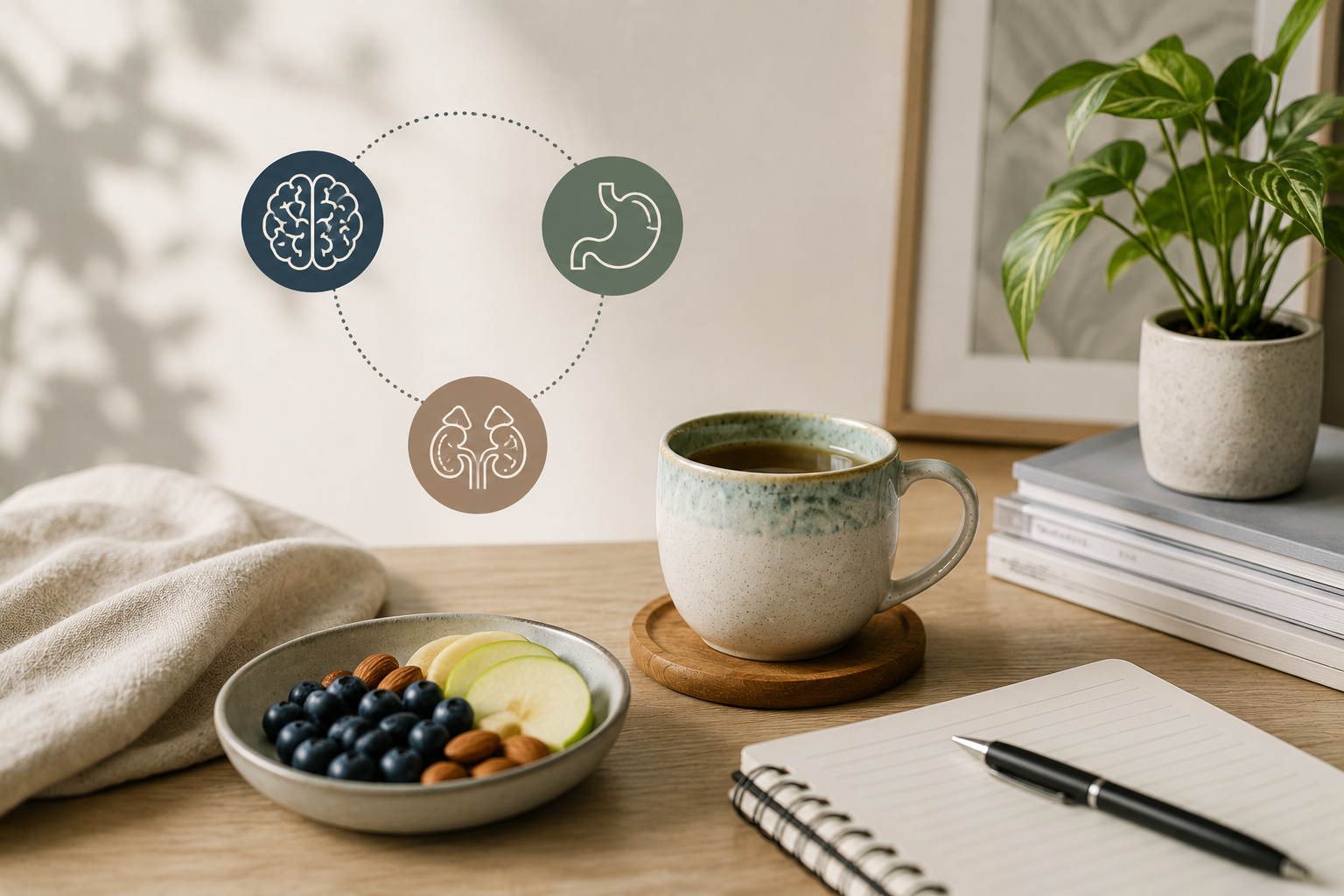
Stress does more than affect mood. It also changes how the body regulates hunger, cravings, and food choices. At the center of this process is the HPA axis and emotional eating connection. The hypothalamic-pituitary-adrenal (HPA) axis is the body’s primary stress-response system, coordinating the release of hormones that help manage physical and emotional challenges. When stress becomes chronic, however, this system can encourage eating patterns driven by emotion rather than hunger.
What Is the HPA Axis?
The HPA axis is a communication network between the hypothalamus, pituitary gland, and adrenal glands. When the brain detects stress, it signals the adrenal glands to release cortisol, commonly known as the stress hormone.
In the short term, cortisol helps the body respond to immediate challenges by increasing alertness and mobilizing energy. Once the stressful event has passed, hormone levels usually return to normal.
How Stress Triggers Emotional Eating
Problems arise when stress becomes frequent or long-lasting. Constant activation of the HPA axis keeps cortisol levels elevated, affecting both appetite and food preferences.
Higher cortisol levels can:
- Increase feelings of hunger.
- Intensify cravings for sugary and high-fat foods.
- Reduce the ability to resist unhealthy snacks.
- Encourage eating for comfort rather than nutrition.
These foods temporarily stimulate the brain’s reward system, creating a brief sense of relief. Over time, this can reinforce emotional eating as a habitual response to stress.
Why Emotional Eating Feels So Rewarding
Stress influences more than hunger. It also affects brain chemicals linked to pleasure and motivation. Comfort foods can trigger dopamine release, providing temporary emotional relief.
Unfortunately, the effect is short-lived. Once the stress returns, cravings often follow, creating a cycle of stress, overeating, guilt, and renewed cravings. This pattern may contribute to unwanted weight gain and make healthy eating habits more difficult to maintain.
Breaking the Stress-Eating Cycle
Managing emotional eating starts with addressing stress instead of simply restricting food. Healthy strategies include:
- Practicing mindfulness or meditation.
- Engaging in regular physical activity.
- Prioritising quality sleep.
- Eating balanced meals with protein and fibre.
- Identifying emotional triggers through journaling.
- Seeking professional support if emotional eating becomes persistent.
These habits help regulate the body’s stress response while promoting healthier relationships with food.
Final Thoughts
The relationship between the HPA axis and emotional eating highlights how closely the brain, hormones, and eating behaviors are connected. Emotional eating is not simply a lack of willpower. It is often a biological response shaped by chronic stress and elevated cortisol levels. Understanding how the HPA axis works and how semaglutide for weight loss can help individuals recognize their triggers, manage stress more effectively, and make food choices that support both physical and emotional well-being.