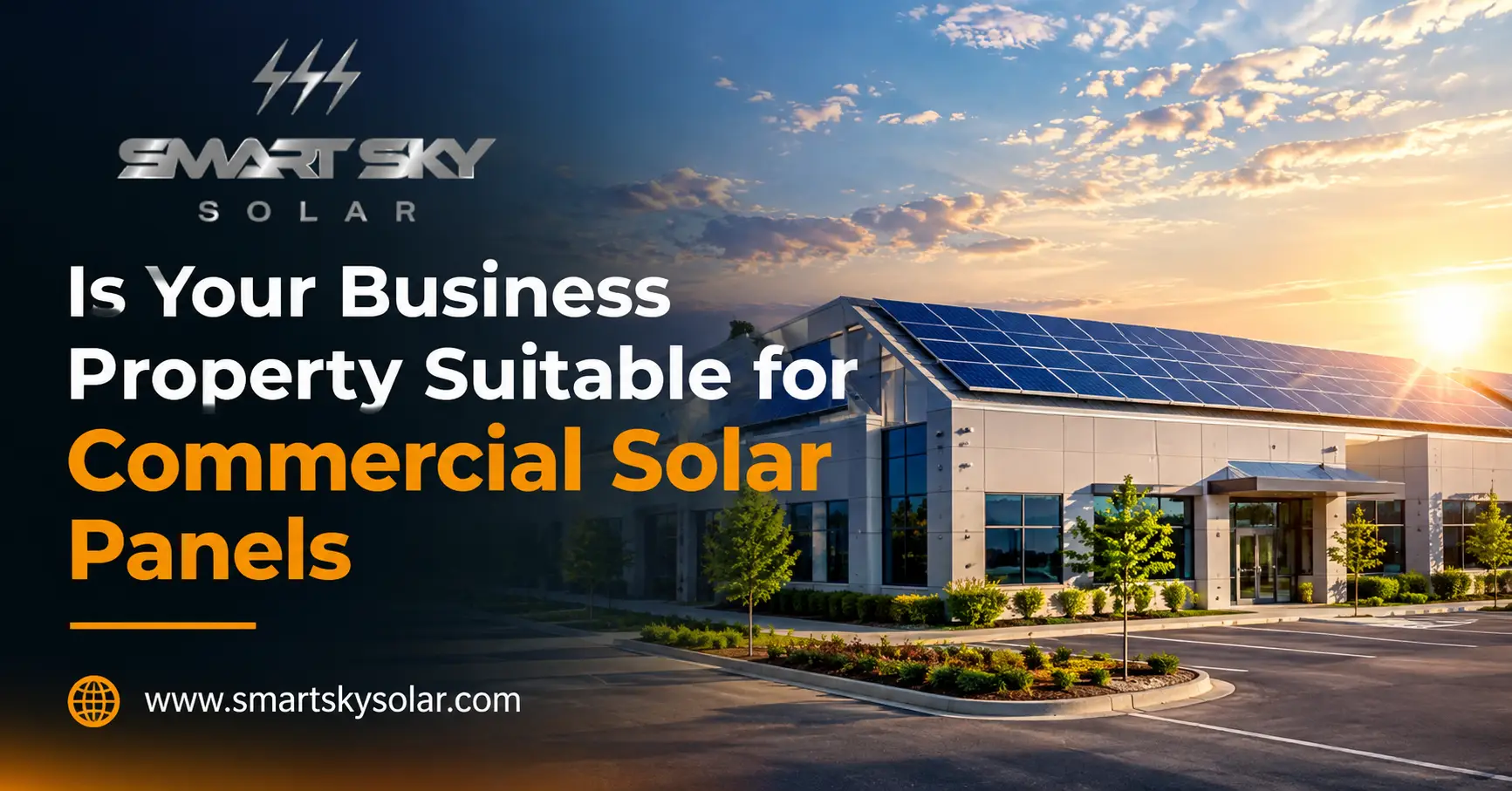
Commercial solar panels can help businesses generate electricity on-site while making better use of available property. However, not every commercial building is equally suited for a solar installation. Factors such as roof condition, sunlight exposure, available space, energy consumption, and electrical infrastructure can all influence whether solar is a practical option.
Before investing in a commercial solar system, it is worth evaluating your property from several angles. Here are some of the key factors to consider.
Start With Your Roof
For businesses considering rooftop solar, the condition of the roof should be one of the first considerations. Solar panels are designed to remain in place for many years, so installing them on an aging roof that needs significant repairs may create complications later.
A professional assessment can identify potential concerns such as leaks, structural damage, deteriorating materials, or areas that may need reinforcement. If the roof is approaching the end of its service life, addressing those issues before installing solar panels may be more practical.
Roof size also matters. HVAC equipment, vents, skylights, and other structures can reduce the amount of usable space available for panels.
Evaluate Sunlight Exposure
Solar panels require sunlight to generate electricity, making the property’s exposure another important consideration. Nearby buildings, trees, towers, or other structures can cast shadows across the roof and affect the amount of sunlight reaching the panels.
The direction and slope of the roof can also influence solar exposure throughout the day. However, a building does not necessarily need a perfectly oriented roof to be suitable for solar.
A professional site assessment can evaluate shading patterns and determine which areas of the property receive adequate sunlight. If rooftop space is limited, a suitable ground-mounted installation may also be an option where sufficient land is available.
Review Your Business’s Energy Usage
Your business’s electricity consumption can help determine whether commercial solar makes sense for your property. Reviewing recent electricity bills can provide insight into how much energy your business typically uses and when demand is highest.
Businesses that operate primarily during daylight hours may be able to use a portion of the electricity generated by their solar panels as it is produced. Facilities with significant or consistent energy requirements may also have different system-sizing considerations than smaller businesses.
Understanding your current energy consumption provides a useful starting point when evaluating potential solar capacity.
Consider Available Installation Space
A suitable commercial property may offer more than just rooftop space. Depending on the site, solar panels could potentially be installed on ground-mounted structures, parking areas, or other suitable locations.
However, available space needs to be assessed carefully. Factors such as shading, drainage, accessibility, local regulations, and existing property use can all affect whether an area is suitable.
The goal is not simply to find empty space, but to identify an area where solar panels can be installed safely and effectively without interfering with normal business operations.
Check Your Electrical Infrastructure
Your property’s existing electrical system is another important part of the assessment. Commercial solar installations need to integrate with the building’s electrical infrastructure, and older systems may require upgrades or modifications.
An electrical evaluation can help identify potential compatibility issues and determine whether additional work may be necessary before installation. Addressing these considerations during the planning stage can help make the installation process more predictable.
Understand Local Requirements
Commercial solar projects may involve building permits, electrical requirements, utility interconnection procedures, and other local regulations. Requirements can vary depending on the property’s location, system size, and installation type.
It is also worth researching available incentives, financing arrangements, and utility policies before making a decision. Understanding these factors can help businesses evaluate the overall feasibility of a solar project.
What Are the Benefits of Solar Energy for Businesses?
The benefits of solar energy can extend beyond simply generating electricity. Depending on the system and the property’s energy needs, businesses may be able to reduce their reliance on electricity purchased from the grid and take greater control over how they source and manage energy.
Solar can also support long-term energy planning and sustainability initiatives. For businesses seeking to incorporate renewable energy into their operations, a well-planned solar installation can become part of a broader approach to energy management.
Is Your Business Property Ready for Solar?
There is no universal checklist that guarantees a property is suitable for commercial solar. A large, unobstructed rooftop may offer different opportunities from a smaller building with limited roof space. Similarly, a property with significant daytime energy consumption may have different considerations from one with primarily nighttime operations.
The best way to understand your property’s potential is through a professional solar assessment. Evaluating the roof, sunlight exposure, energy usage, available space, electrical infrastructure, and local requirements can help you determine whether commercial solar is a practical option for your business.