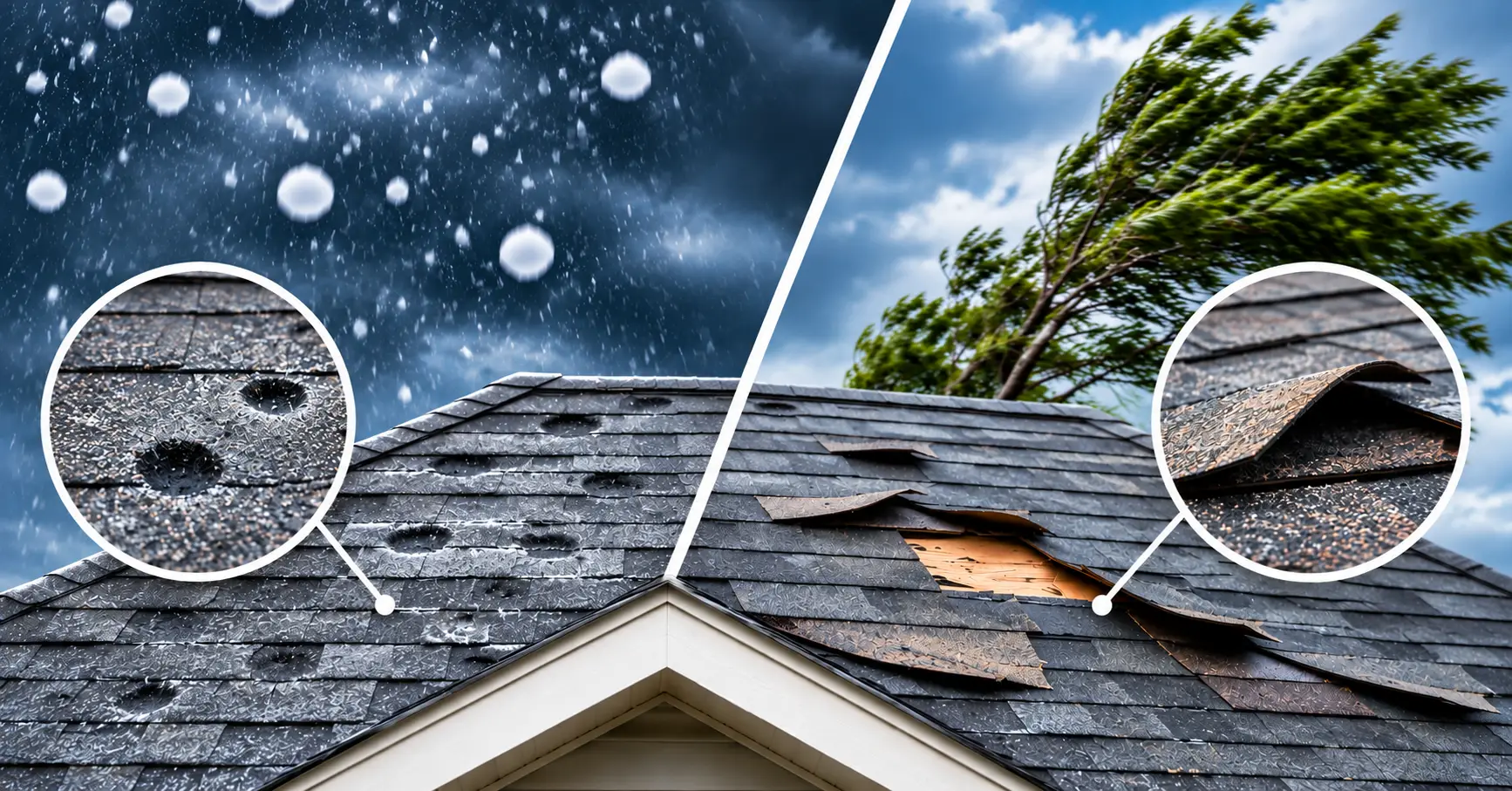
After a storm, your roof may look fine, but it could still have damage that will require costly repairs if it isn’t taken care of soon. Both hail and wind can cause damage to your roof, but they usually do different kinds of damage. Knowing the difference can help you determine whether you need to have a roofing professional come out and check it for damage.
In addition, knowing the difference between roof damage: hail vs. wind can help you identify and document the problems your roof has with greater accuracy after a storm, reducing the risk that trivial concerns will become large and pricey jobs.
How to Identify Hail Damage
Hail damage causes individual hail impressions where individual hailstones strike the roof. Look for these things to identify hail damage:
- Dark round impressions or pockmarks on the shingles: Oftentimes, on asphalt shingles, the impacted area will be dark, and the colorful granules on the top surface of the shingle have been knocked off.
- Soft spots: the consistency of a bruised apple when pressure is applied directly over a hail strike. This is caused by the fracture of the internal fiberglass mat of the shingle.
- Hail damage causes widespread metal damage to the metal roof vents, valley flashing, or aluminum gutters. This is often a tell-tale sign of a hail strike.
- Accumulations of asphalt granules in the gutters and downspouts directly after a hail storm.
How to Identify Wind Damage
Wind damage typically occurs when fast gusts work their way beneath shingles to create a partial vacuum that lifts, tears, or bends the roofing materials. Here is what to look for to identify wind damage:
• Lifted, Curled, or Missing Shingles: Wind moves in horizontal lines across your roof line. It lifts loose edges, raising individual shingles or outright ripping whole tabs from the roof, exposing patches of underlay or wood deck material to view from ground level.
• Creased and Folded Shingles: Shingles that were yanked up by the wind, then flapped back down into place often have a permanent, horizontal crease line along the top of the tab, where the material bent back onto itself.
• Broken or Broken Seal Strips: Trace around the edges of shingles that appear to be otherwise fine but loose, looking for a broken, dirty, or debris-coated seal strip. That means wind has forcibly unsealed that particular section of your roof, and a roofing experts in Laurens, Greenville, and more awaits.
• Horizontal Line Patterns: While hail hits tend to be more or less completely random across a roof surface, wind damage concentrates along the edges of the roof, around the eaves or on either side of an outbuilding or entirely on one side of the roof slope that took the brunt of the storm’s path.
Hail vs. Wind—What’s the Difference
Roof Damage: Hail vs. Wind: What are the differences between the two? The simplest distinction is that hail damages shingles, creating such problems as indentations, bruising, cracks, and the loss of granules. Wind damage, on the other hand, affects the shingles, lifting, curling, loosening, or removing them.
The Insurance Information Institute reports that wind and hail caused 42.5% of all homeowners’ property-loss claims in 2023, making it one of the most frequent types of damage. Hail can also damage gutters, siding, and roof vents, whereas wind can bring down branches and debris that pelt the roof. Aging and weathering of materials can sometimes be confused with storm damage, so a professional storm damage roof repair inspection is a must in order to assess the situation and plan repairs.
What Should You Do After a Storm?
If you think that your roof has been damaged, the first thing you should do is check it out and look for missing shingles, dents, fallen debris, damaged gutters, or other issues. However, avoid climbing on your roof if you think that it may be unsafe. Instead, you can call for a professional roofing company in Greenville, SC. It is also good to document the damage for your insurance.
Final Verdict
Understanding Roof Damage: Hail vs. Wind can help you recognize what to look for in the days and weeks following a storm. Storms of any kind can cause damage to roofs, even if the roof has not had a hole large enough to leak rain. This means that cracks, lifted shingles, and other issues can cause leaks and more damage if they are not repaired soon.
Whether your roof has been damaged by hail, high winds, or a combination of the two, Extreme Roofing LLC, can help you identify the issues and recommend treatments and repairs. Get a free quote now to get your roof and shingles for free before the next storm hits.